
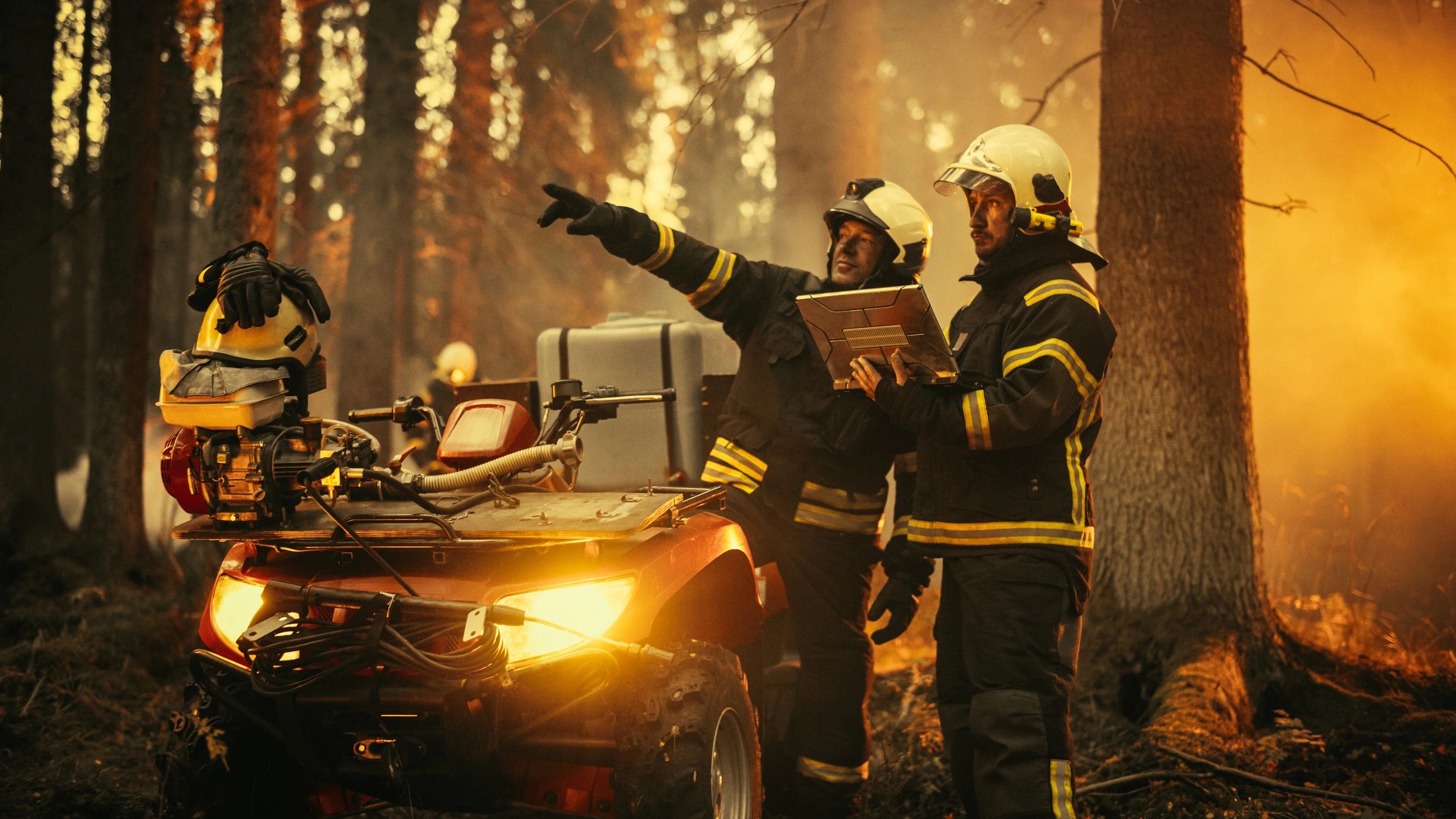
Rapid Response
Acute Disaster Response, Search & Rescue
Rapid-deployment search and rescue, mass-care logistics, and infrastructure recovery across the full spectrum of natural and man-made disasters. Derived from FEMA and Ready.gov Emergency Management Doctrines.

Mission
Operational readiness for complex emergencies
This capability area supports rapid field mobilization, coordinated command structures, and life-sustaining logistics when communities face catastrophic disruption.
Search and rescue
Deployable teams support urban, coastal, wildfire, and severe-weather response with field robotics, reconnaissance, and survivor extraction planning.
Mass-care recovery
Integrated sheltering, feeding, evacuation, and utilities restoration frameworks help stabilize affected populations and restore essential lifelines.
Specialist units
Specialist units organized for incident command, rescue operations, hazard analysis, infrastructure recovery, and community stabilization.
Incident Management & Unified Command Systems Group
Multi-agency coordination, operational planning, and command integration for complex incidents.
Urban Search & Rescue (USAR) Strike & Robotics Team
Collapsed-structure search, technical rescue support, and robotics-enabled reconnaissance.
Mass Care, Emergency Sheltering & Feeding Logistics Unit
Shelter operations, feeding systems, and resource distribution for displaced populations.
Hazard Risk Assessment & Mitigation Planning Task Force
Risk mapping, consequence analysis, and mitigation planning for evolving threats.
Earthquake, Seismic & Structural Collapse Response Team
Seismic incident response, structural triage, and collapse-zone operational support.
Flood, Flash Flood & Dam Failure Hydrological Unit
Hydrological monitoring, flood-impact assessment, and water-driven evacuation support.
Hurricane, Cyclone & Coastal Surge Strike Team
Storm-impact deployment, surge-zone coordination, and coastal emergency field support.
Wildfire Response, Fire-Line Mitigation & Drone Task Force
Wildfire perimeter assessment, drone reconnaissance, and fire-line support planning.
More specialist units
Additional units extend the response architecture across severe weather, hazardous materials, infrastructure recovery, and civilian protection logistics.
Tornado, Severe Weather & Early Warning Dispatch Unit
Forecast-informed dispatch, warning coordination, and rapid severe-weather response support.
CBRN & Hazardous Materials Incident Field Response Team
Field assessment and operational support for chemical, biological, radiological, and hazardous materials incidents.
Infrastructure Restoration & Lifeline Utilities Recovery Task Force
Restoration planning for power, water, transport, and other essential community systems.
Fatality Management & Dignified Handling Logistics Team
Respectful logistical support frameworks for fatality management during large-scale incidents.
Community Evacuation & Transit Corridor Logistics Unit
Evacuation route coordination, movement planning, and transit support for affected populations.
Civil Unrest Stabilization & Crowd-Dynamics Unit
Protective planning and crowd-flow analysis to reduce risk during unstable public conditions.
Community Stabilization & Peace Support Operations Team
Community-centered stabilization support that helps restore order, continuity, and local confidence.
Integrated disaster doctrine
All units are framed within interoperable emergency management doctrine, field coordination, and humanitarian protection priorities.